Marks Market Minutes - February 2026
The Market Is Telling You Exactly What It Wants. Are You Listening?
I had a conversation last week with a seller in Lake Oswego who was nervous about listing this spring. "Is it a bad time?" she asked. I told her the truth: it depends entirely on what you bring to the table.
Her home was updated, well-maintained, and priced where it should be. It went pending in nine days.
Meanwhile, I'm watching overpriced listings with deferred maintenance sit at 90+ days across the metro. Same market. Completely different outcomes.
That's the story of Portland real estate right now.
Here's what February told us.
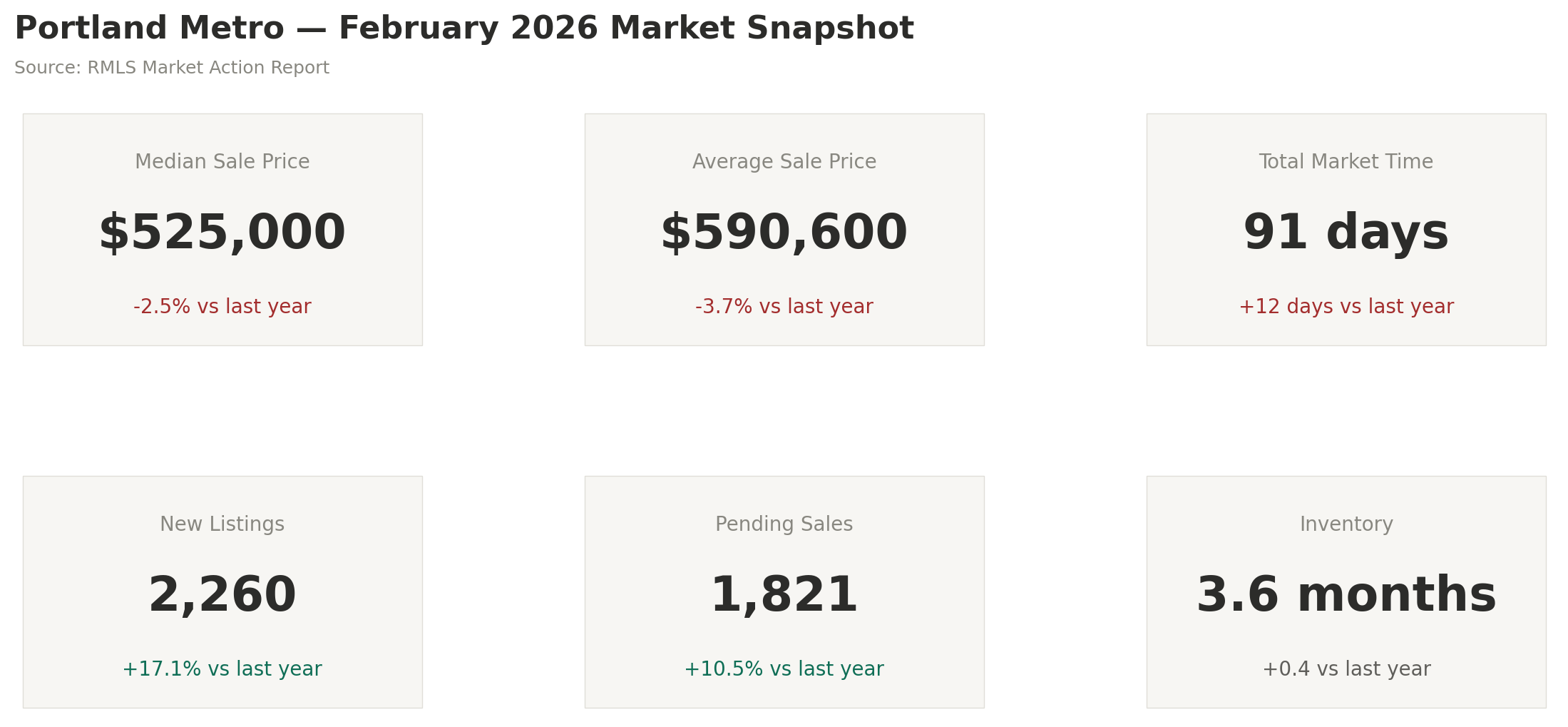
New listings jumped 17% compared to last year. More sellers are stepping off the sidelines, which means more choices for buyers. Pending sales climbed about 10%, so demand is there — it's just selective. Buyers aren't desperate. They're deliberate.
The median sale price came in at $525,000, down roughly 2.5% from a year ago. Average price dipped about 3.7%. Before anyone panics, zoom out: the rolling 12-month median is dead flat year over year. Prices aren't falling. They're consolidating. There's a big difference.
Inventory sits at 3.6 months. Not a buyer's market. Not a seller's market. A strategy market. And total market time stretched to 91 days — up 12 days from last February. That extra time on market isn't random. It's the market's way of punishing homes that aren't priced right or prepared well.
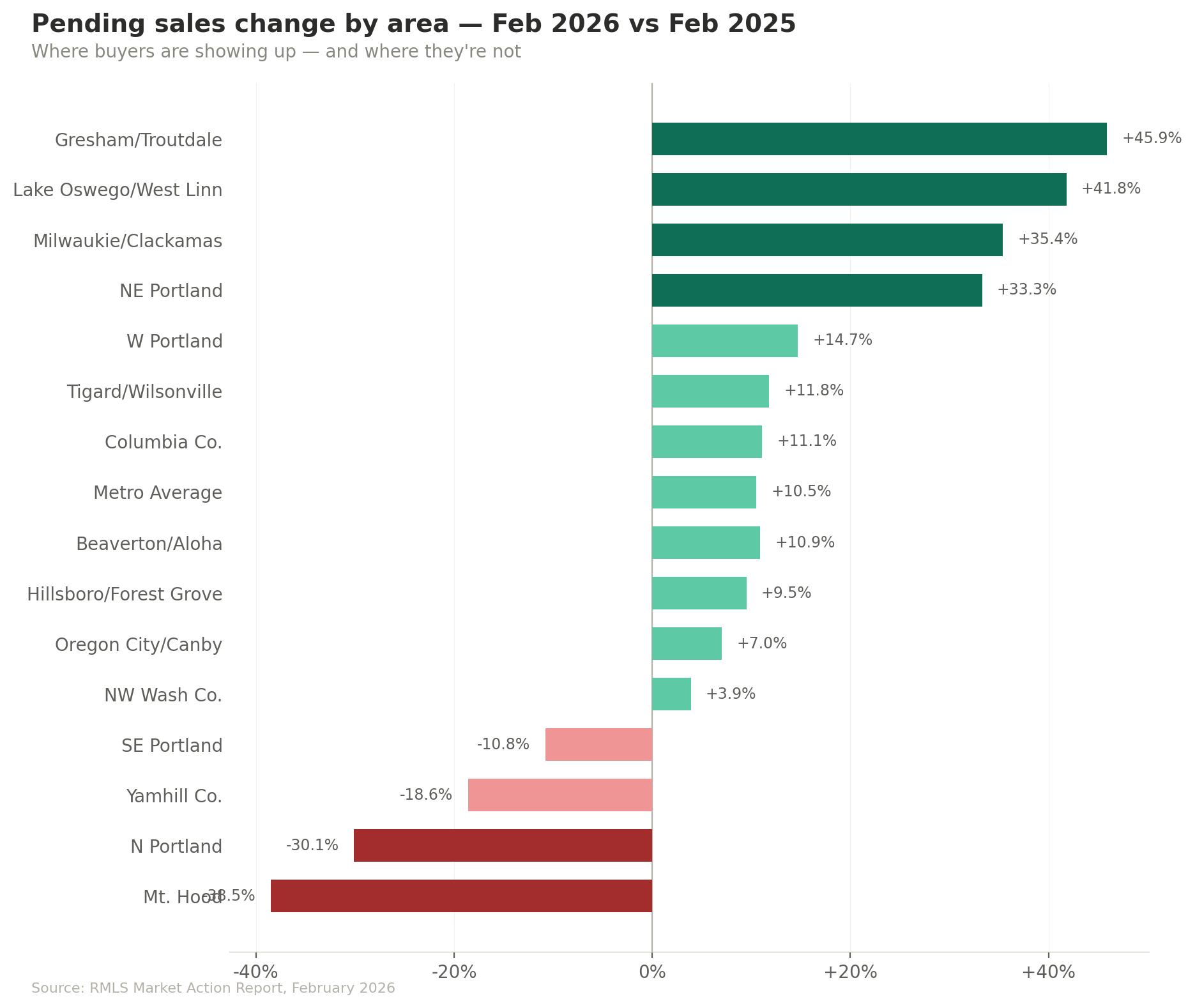
The tale of two markets is real.
Lake Oswego and West Linn saw pending sales surge over 40% year-over-year. Milwaukie and Clackamas were up 35%. Gresham and Troutdale, up 46%. Buyers are active in neighborhoods they believe in — especially when the price makes sense.
On the flip side, areas with softening demand or overbuilt inventory are seeing longer days on market and more price reductions. The gap between "well-positioned" and "hope-for-the-best" has never been wider.
Here's the lesson I keep coming back to.
Real estate rewards preparation. It always has. But in a market like this — where buyers have options and rates are still elevated — preparation isn't optional. It's the whole game. The right price, the right condition, the right presentation. That combination still wins, and it wins fast.
The wrong combination? You sit. You reduce. You wonder what happened.
I think about this the same way I think about investing. You don't get rich by timing the market perfectly. You get rich by consistently putting yourself in a position where the math works in your favor. A well-prepared home in a good neighborhood at the right price — that's a position where the math works. Every time.
What I'd tell buyers right now.
You have leverage you didn't have two years ago. More inventory, more time to decide, and sellers who are increasingly willing to negotiate. But don't confuse patience with paralysis. The best-priced homes in desirable areas are still moving. If you're waiting for some dramatic crash to swoop in, you're likely waiting for something that isn't coming. Prices are flat, not falling off a cliff. And every month you wait, you're making someone else's mortgage payment instead of your own.
What I'd tell sellers.
This isn't 2021. You can't just stick a sign in the yard and field five offers by Sunday. But the market isn't broken — it's just honest. It's rewarding the homes that deserve to be rewarded. Invest in the prep work. Fix the things you've been ignoring. Price it where a buyer looks at the numbers and says, "That's fair." Do that, and February's data says you'll be just fine.
The homes that are struggling? They're the ones that skipped those steps.
If you're thinking about making a move this spring — buying or selling — I'm happy to walk you through the numbers for your specific neighborhood. Sometimes a 15-minute conversation saves you six months of guessing.
— Mark
Data source: RMLS Market Action Report, Portland Metro, February 2026.